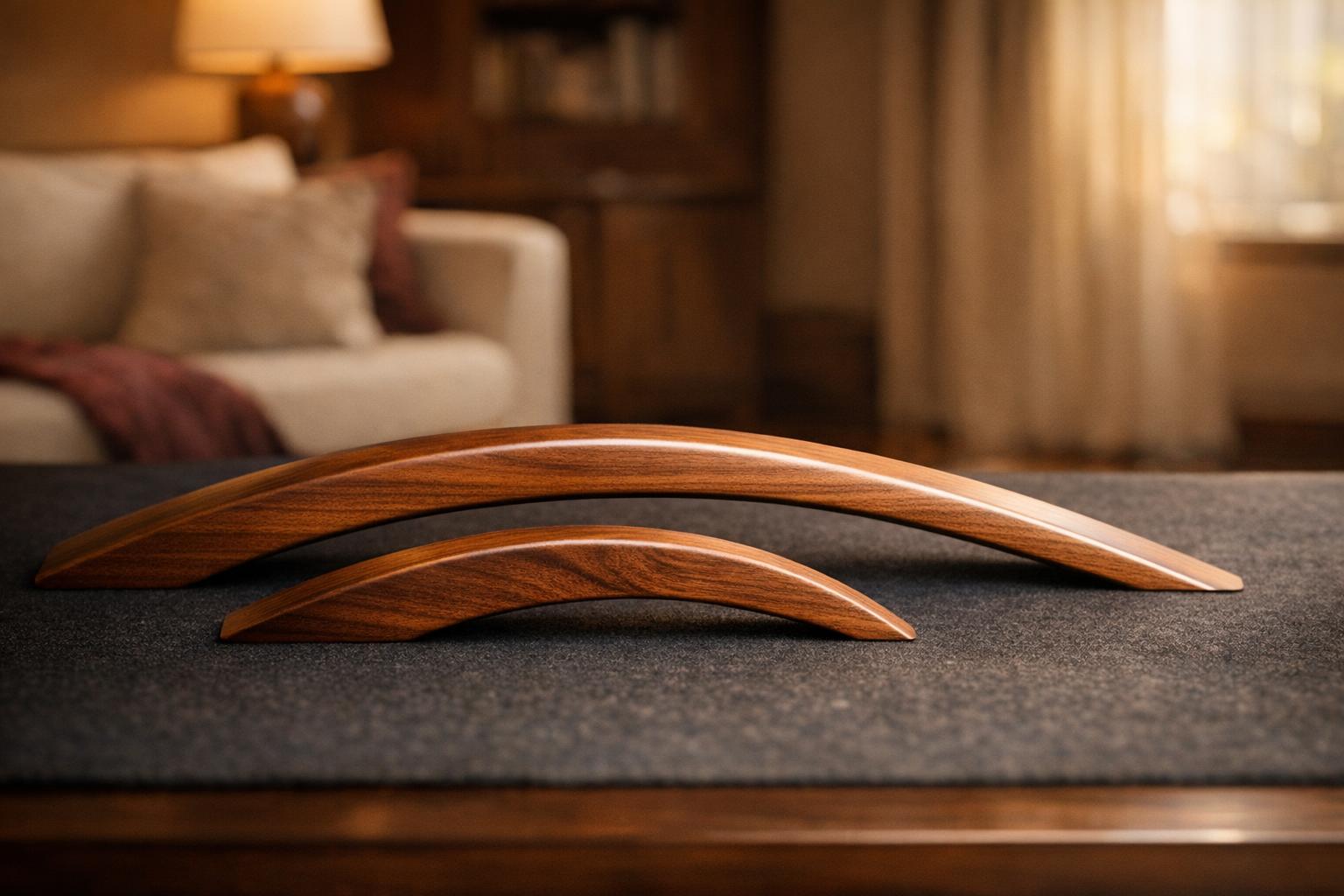
The track is the rail the rollers travel along, and its stated shape tells you where the rollers can reach. Like mechanism D-numbers, track designations are seller statements - but they are unusually informative ones, because they describe geometry rather than feel.
The three common designations
S-track describes a curved rail following the back's natural curve, typically from neck to lower back. L-track extends the rail under the seat. SL-track states both: the back-following curve plus the under-seat extension, which is why our spec-fit formula credits SL at full weight, L at 0.7 and S at 0.4.
These letters describe the rail's shape, not its length in inches, so an SL-track on one chair and an SL-track on another can still cover a different total distance - the letter is a starting point for comparison, not the whole picture.

Stated length is worth more than the letter
Some listings add a track length in inches - a number worth more than the letter code, because two SL-tracks can differ by several inches of reach. When a listing states neither letter nor length, our score credits nothing: we never infer a track from photos or from other chairs by the same brand.
Where both a letter and a length are stated, record them together in your comparison notes; the letter groups chairs by rail shape while the length differentiates chairs within the same shape group, and the two figures answer different questions.
Matching track to the person
Taller users should look for listings that state a height range alongside the track designation; a rail that ends mid-back for one person reaches the neck of another. The stated user height range, where present, is one of the most practical lines in any chair listing - check it before the badge list.
Some listings also state a maximum user weight or seat width figure near the height range; all three numbers together describe the intended body-size range for the chair and are worth checking against the household members who will actually use it.
How track shape interacts with recline and mechanism
Track shape, recline behavior and roller mechanism are three separate specifications that a manufacturer can combine independently, so a long SL-track does not guarantee a 4D mechanism or a zero-gravity preset, and vice versa. When comparing chairs, treat the track guide, the mechanism guide and the recline guide as three separate checklists to run through the same listing rather than assuming a strong result on one predicts a strong result on the others.
If a listing shows a diagram of the track path, comparing that diagram against the stated letter code is a reasonable sanity check, keeping in mind the diagram is illustrative rather than a measured drawing.
Roller count and coverage width alongside the track
Some listings also state a roller count, separate from the track letter - a number of rollers distributed along the track's length. Two chairs with the same SL-track letter and similar stated length can differ in roller count, which affects how continuously the track is covered rather than how far it extends. Record roller count alongside track letter and length when a listing states it, and treat the absence of the figure the same way you would treat a missing dimension in the room fit guide - as a documented gap, not as evidence either way.
Track designations, like mechanism designations, are best used as an initial filter that narrows a long catalog to a manageable shortlist, with the remaining decision resting on the specific numbers each listing states rather than on the letter code alone.
Building a track comparison table
As with mechanism designations, a simple side-by-side table helps when comparing several listings: one column for the track letter, one for stated length in inches, one for stated roller count, and one for the stated user height range covered earlier in this guide. Filling the table directly from each live Amazon listing avoids relying on memory or on a brand's general reputation, both of which can be misleading when a single manufacturer sells several different track configurations across its product line.
Once the table is filled in, the comparison becomes a straightforward exercise in matching your own height, budget from the under-$2,500 guide and room dimensions against the documented numbers, rather than a judgment call based on which listing's marketing copy reads most convincingly. Keep the table alongside the notes you built for mechanism designations and recline terms so the full comparison lives in one place rather than scattered across separate research sessions.