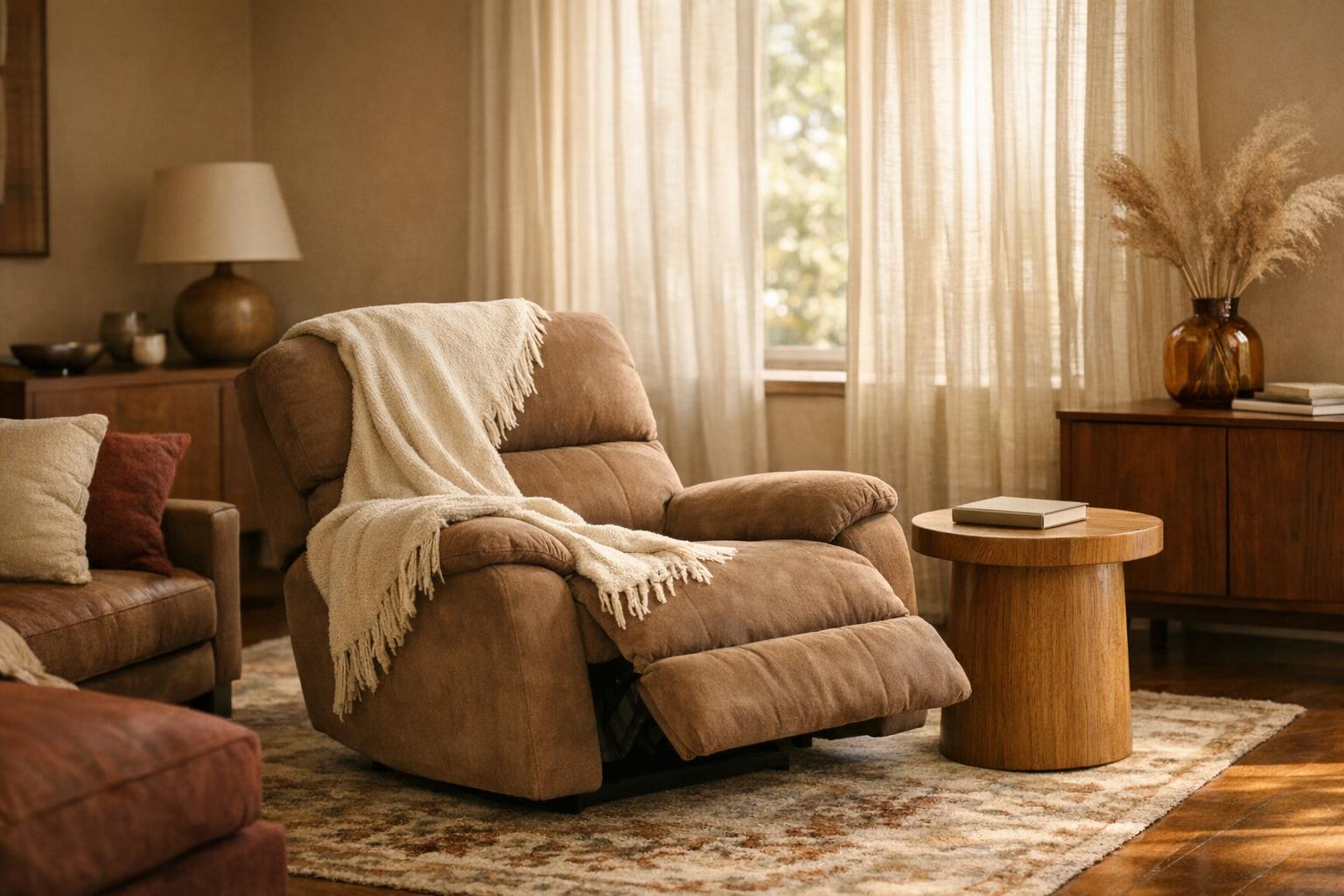
Zero-gravity is the most evocative phrase in massage chair marketing. On a listing it states something concrete and modest: the chair can recline into a position where the legs are raised to roughly heart level and the back is steeply tilted. Nothing about the phrase is measured or standardized.
Where the phrase comes from
The posture is loosely modeled on the neutral body position associated with spaceflight seating. On a chair listing, zero-gravity typically means one or more preset recline angles - sellers often state "one-touch zero gravity" or count stages. Our zero-gravity comparison includes exactly the chairs whose listing states the feature, and the spec-fit formula credits it as a stated recline term.
Some listings distinguish between a single fixed zero-gravity preset and a range of two or three stages selectable by the user. Where a listing states a specific stage count, that number is a more useful comparison point than the presence of the phrase alone, since it indicates how much control the seat offers over the final angle.

What it changes in practice
A deep recline redistributes how your weight meets the chair, and it changes the chair's footprint dramatically. A zero-gravity cycle needs recline clearance behind the backrest and in front of the footrest - the numbers to check are the listing's stated fully-reclined length and wall-clearance figure, covered step by step in the room fit guide.
Because the backrest travels backward and the footrest extends forward at the same time, the reclined footprint of a zero-gravity chair is often close to double its upright depth. That single figure is worth writing down before comparing anything else about a chair with this feature.

Standard recline is not a defect
Chairs without the designation still recline; they simply do not state the specific preset posture. If the listed dimensions fit your room better, or the review record is stronger, a standard-recline chair can be the better pick. The comparison table shows both what is stated and what the public review record says - use them together.
A chair that reclines manually to a similar angle, without naming it zero-gravity, offers the same seated geometry without the marketing label - the deciding factor should be the stated angle and clearance figures, not whether the phrase appears in the title.
Reading the recline stages a listing states
Where a listing enumerates recline stages numerically, it is usually describing preset stopping points along a continuous track rather than fully independent modes. Some sellers also state a maximum recline angle in degrees; when that figure is present, treat it the same way as any other documented specification and compare it directly against other listings in your shortlist via the buying guide.
If a listing offers a video or diagram of the recline stages, it is worth watching to see whether the stated stage count matches what is shown, since the written bullet points and the visual demonstration do not always agree in detail.
Recline motors, remotes and the reconfirmation habit
The recline itself is usually driven by one or more stated motors, controlled through a wired or wireless remote listed among the chair's specifications. Where a listing states motor count, remote type, or a memory function that returns the chair to a saved recline position, those details are useful supplements to the zero-gravity label because they describe how the recline is actually operated day to day.
As with any other listing detail, confirm the recline specifications on the live Amazon page immediately before ordering rather than relying on a cached screenshot from earlier research, since sellers do periodically revise stated features on an existing listing without changing the product photos.
Comparing zero-gravity chairs against each other
Once you have narrowed a shortlist to chairs that all state a zero-gravity position, the differentiators shift to the supporting numbers: stated stage count, maximum recline angle where given, fully reclined footprint from the room fit guide, and whether the recline pairs with a specific track designation covered in the track guide. A chair that states more recline stages or a larger recline angle is not automatically better if its footprint does not fit your room, which is why the room measurement should always come before the feature comparison rather than after.
As with mechanism designations, treat the zero-gravity phrase as a starting filter, then let the underlying specification numbers make the actual decision between the chairs left on your shortlist.